How to keep roasted vegetables from turning soggy
· Editorial team newsfromnewyork24.com
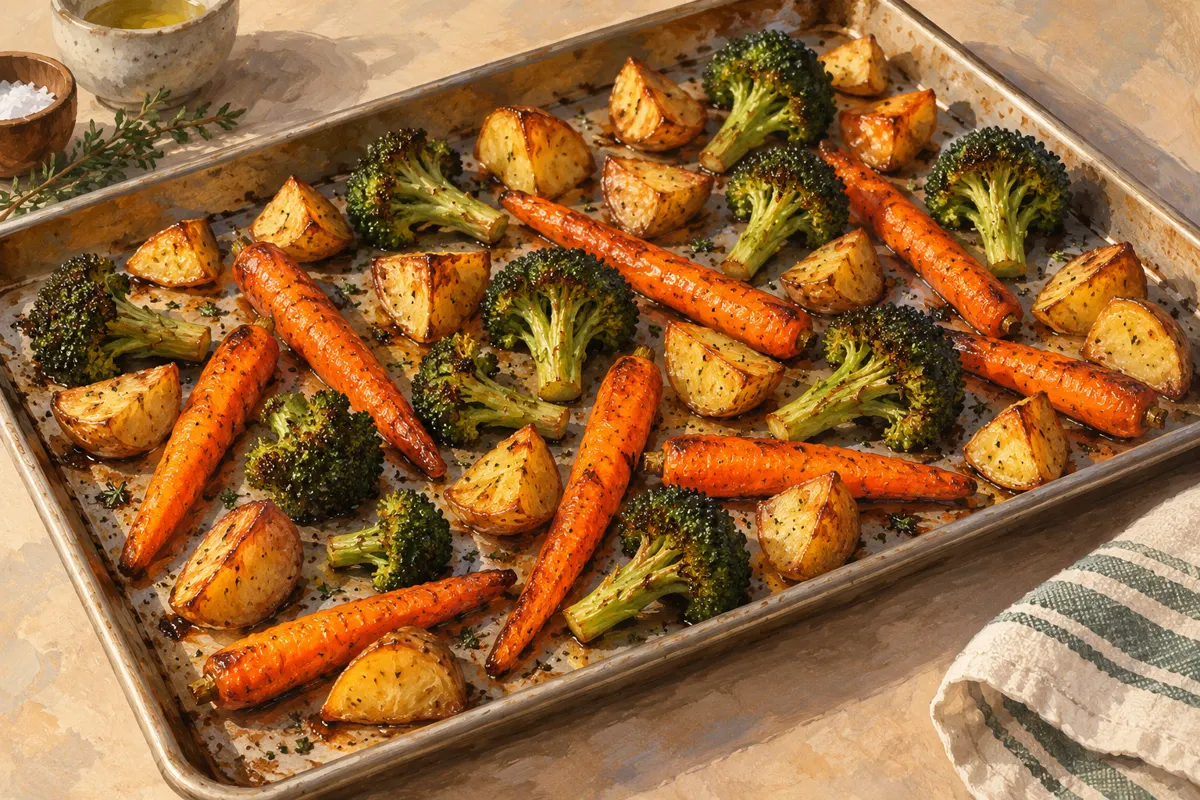
To keep roasted vegetables from turning soggy, dry them thoroughly, spread them in one uncrowded layer and put them into a fully preheated oven at 425°F. Cut similar vegetables into even pieces, and cook dense vegetables separately from faster-cooking ones—or add the faster ones later. These simple changes help moisture escape and give the edges a chance to brown.
Dry vegetables before adding oil
Water left on washed vegetables adds moisture to the pan, encouraging steaming. Drain them well, then pat them dry with a clean towel before seasoning. Pay attention to places where water collects, such as between broccoli florets. If vegetables have been soaking, drying them afterward is especially important.
Zucchini and summer squash need a little extra attention. If the center is seedy and watery, remove that portion before cutting the remaining flesh. Expect these softer vegetables to become tender; browned edges are a more useful goal than trying to make every piece crunchy.
- Wash and drain the vegetables.
- Pat the surfaces dry before tossing with oil.
- Remove watery seed centers from squash when needed.
Cut evenly and group by cooking time
Keep pieces of the same vegetable roughly equal in size and thickness. A tray of uneven carrot chunks can leave you choosing between hard large pieces and overcooked small ones. For florets, aim for similar sizes rather than identical shapes.
Equal size does not mean different vegetables will finish together. Potatoes usually need longer than asparagus or zucchini. Combining everything at the start can make the softer vegetables mushy while you wait for the denser ones to become tender.
- Asparagus: about 10–15 minutes.
- Broccoli florets: about 20–25 minutes.
- Diced carrots and halved Brussels sprouts: about 25–30 minutes.
- Potatoes and sweet potatoes: often about 30–40 minutes, depending on the cut.
Use separate pans for vegetables with different cooking times, or start the slower vegetables first and add the quicker ones later. Keep enough space available for those additions. Treat the clock as a reminder to check, and remove each vegetable when it is tender with browned edges.
Give each piece room on a shallow pan
Choose a large, shallow, rimmed baking sheet. A deep casserole dish holds moisture around the vegetables, while a shallow pan allows better air circulation. Spread pieces in one layer with visible gaps. If they overlap or form a tightly packed blanket, divide them between pans or roast in batches.
Toss with enough oil to coat the surfaces evenly, without leaving the vegetables sitting in puddles. Season with salt and pepper. For easier cleanup, use parchment rated for the cooking temperature; for stronger browning, roast directly on a well-oiled baking sheet.
Preheat fully and check the texture
Preheat the oven to 425°F before putting the vegetables in. Both supplied recipes use this temperature to encourage browning. Turn the vegetables roughly halfway through their expected cooking time so another surface can contact the pan.
- Put the dried, evenly cut and lightly oiled vegetables on the pan with gaps between pieces.
- Roast in the fully preheated oven.
- Turn the pieces around halfway through, keeping them spread out.
- Check for browned edges and a tender center before removing the pan.
If carrots are still hard, they need more cooking time. Remove any faster-cooking vegetables that are already done and let the carrots continue. On the next batch, cut the carrots more evenly or give them a head start.
Finish after roasting and reheat with space
Add lemon juice, vinegar or dressing after roasting. Serve dips alongside the vegetables so you can add them as you eat. Fresh herbs also work as a finishing touch without complicating the basic roasting method.
For leftovers, spread the vegetables on a baking sheet and reheat at 350°F until heated through, approximately 10 minutes. An uncrowded air fryer basket is another option. A microwave is convenient, but it can leave vegetables softer, so choose the oven or air fryer when browned edges matter most.