How to use vegetable scraps for natural fabric dyeing
· Editorial team newsfromnewyork24.com
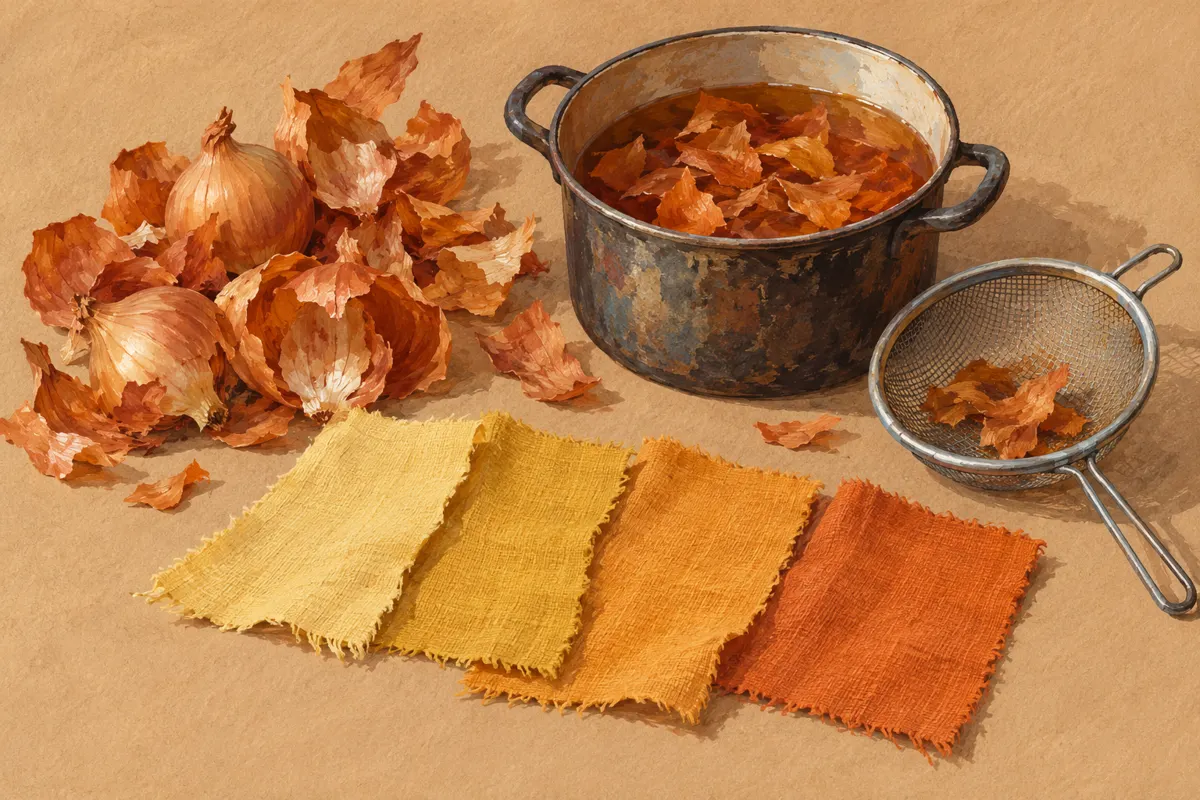
You can dye small pieces of natural fabric with dry onion skins by simmering the skins in water, straining the liquid and gently heating the fabric in the resulting dye bath. Yellow onion skins can produce yellow, orange and mustard tones, but the result depends on the fiber and its preparation. Start with a scrap, and keep all dyeing equipment separate from cooking utensils.
Collect dry onion skins and dedicated equipment
The dry, papery outer skins left from cooking are the material to save. Keep them in a dry container, leaving out juicy pieces of onion flesh. Moisture can encourage mold; discard moldy material rather than adding it to your dye bath. You can separate yellow and red onion skins to compare their results.
- Dry onion skins and a few small scraps of natural fabric.
- A dedicated dye pot large enough for the fabric to move freely.
- A craft-only stirring spoon, strainer and tongs.
- Heat-resistant gloves and water.
- A place to rinse and dry the fabric.
As a starting guide, the Eco Club tutorial suggests equal dry weights of onion skins and fabric. This is a starting point, not a promise of a particular shade. Dry skins are very light, so a small fabric sample keeps the project manageable.
Choose and wash your fabric
Silk is a useful option for a first sample because it can take onion-skin color without a mordant. Wool can also be dyed without one. Cotton is an option, but untreated cotton may produce a much paler beige or yellow-orange result. Choose fabric with a known fiber content so you can interpret the outcome.
Wash the fabric thoroughly before dyeing, including new scraps. Oils and manufacturing residues can interfere with even color uptake. A more thorough cleaning process, called scouring, can help, but the method should suit the fiber. Wet the clean fabric before putting it into the dye bath.
A mordant is a substance used to help dye bind to fibers. Cedar Dell Designs distinguishes alum for silk and wool from aluminum acetate for cotton and other plant fibers. If you choose to use a mordant, follow instructions for that specific product and fiber. For a simpler first project, try an unmordanted silk scrap.
Make a strained onion-skin dye bath
- Place the dry skins in your dedicated pot and add water to cover them.
- Bring the water to a gentle simmer and hold it there for about an hour. Keep the heat gentle rather than maintaining a rolling boil.
- Allow the liquid to cool. If it looks too pale for your intended experiment, add more skins and gently heat it again.
- Strain out the skins using your craft-only strainer.
- Check that the bath contains enough water for your fabric to move freely. Add water if necessary.
You can dye fabric with the skins still in the pot, but direct contact may create lighter and darker patches. Straining first makes an even result easier to achieve. More skins relative to the amount of fabric can deepen the color.
Dye a sample and compare the color
- Lower your washed, wet sample into the strained bath.
- Heat gently and move the fabric around regularly with your dedicated spoon or tongs.
- Allow about an hour for this first trial, keeping the fabric loose rather than packed into the pot.
- Let the bath cool before handling the sample. For a deeper-color experiment, you can leave the fabric in the cooling bath overnight.
Our suggested project is to compare two scraps of the same fabric, removing one earlier and leaving the other longer. Record the onion type, approximate quantities, fabric and soaking time. Rinse and dry both before choosing a result; some color will wash away during finishing.
Rinse, dry and care for the finished fabric
Rinse the dyed fabric until the water runs clear, then wash gently using a method appropriate for its fiber and hang it to dry. Keep your pot, strainer and stirring tools reserved for craft use after the project.
Do not assume the color is permanent simply because the first rinse is clear. The supplied tutorials describe different outcomes depending on fabric and treatment. Before dyeing something you value, wash your finished sample as you would the intended item and assess the remaining color. A proposed use for successful scraps is a small patchwork detail or decorative fabric piece.